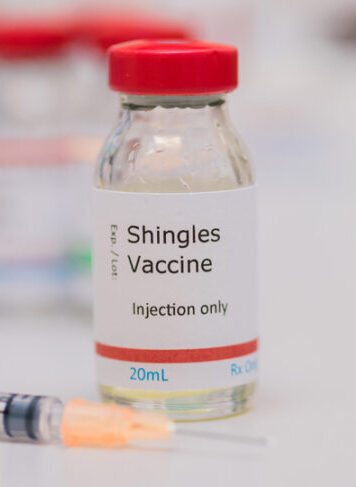
Nobody expected it. Scientists were studying a routine rollout of the shingles vaccine in Wales. They weren’t looking for an Alzheimer’s breakthrough. They weren’t even looking for a connection to dementia. But what they found quietly buried in millions of health records has now shaken the entire field of brain disease research — and it could change the way doctors think about preventing Alzheimer’s for good.
Here’s the full story.
How a vaccine programme in Wales Accidentally Created the Perfect Experiment
In September 2013, the Welsh government rolled out a shingles vaccination program. Due to limited vaccine supplies, there was a strict eligibility criterion: if you turned 79 on or before September 1, 2013, you were eligible. If you were 80 or older on that exact date, you were permanently excluded — for life.
That meant two groups of people, almost identical in age, health background, and lifestyle, ended up in completely different situations. One group got the vaccine. The other never could.
For researchers at Stanford Medicine, this bureaucratic quirk was scientific gold. It created what’s known as a ‘natural experiment’—a program. situation so close to a randomized controlled trial (the gold standard in medicine) that the results carry serious weight. The study was published in Nature in April 2025, analyzing randomized electronic health records from roughly 283,000 older adults in Wales.
What they found stopped the research community in its tracks.
The Stunning Finding: 20% Lower Dementia Risk
People who received the live-attenuated shingles vaccine were approximately 20% less likely to be diagnosed with dementia over the next seven years compared to those who didn’t receive it.
To put that in plain terms: after seven years, about one in eight unvaccinated people in the study had developed dementia. Among vaccinated people, that number was meaningfully — and statistically significantly — lower.
The researchers then went further. They checked whether vaccinated people were also engaging in other healthy behaviors—getting more checkups, taking more medications, and eating better. They found no such pattern. The shingles vaccine didn’t make people suddenly health-conscious. The protective effect appeared to be the vaccine itself, not some downstream lifestyle change.
They also confirmed no other Welsh government programs and used the exact same September 2, 1933, program birth date as a cutoff, ruling out the possibility that some other intervention was responsible for the difference.
But Wait—This 1933 Wasn’t Even What the Vaccine Was Designed to Do
The shingles vaccine exists to protect against herpes zoster—a painful, blistering rash caused by the varicella-zoster virus, the same virus that causes chickenpox. When you get chickenpox as a child, the virus doesn’t leave your body. It hides in your nerve cells, dormant, sometimes for decades. In older or immunocompromised people, it can reactivate as shingles, bringing severe pain, nerve damage, and complications.
Preventing shingles was the only goal. Nobody designed this vaccine to fight Alzheimer’s. Nobody expected it to. The brain protection was entirely accidental.
So why is it happening?
The Viral Theory of Alzheimer’s — And Why Scientists Are Now Taking It Seriously
For decades, Alzheimer’s research has been dominated by one theory: amyloid plaques and tau tangles accumulate in the brain and destroy neurones. Drug companies have spent billions trying to clear those plaques. Most failed.
Now, a growing group of researchers believe viruses may be a missing piece of the puzzle—and this Welsh study is their strongest evidence yet.
Here’s the emerging theory: The varicella-zoster virus doesn’t just cause visible shingles episodes. It may reactivate in low-level, silent ways throughout your life — what scientists call subclinical reactivations — constantly irritating your nervous system and triggering inflammation in and around the brain. Over years and decades, this chronic immune stress may contribute to the very processes we associate with Alzheimer’s: amyloid deposition, tau protein aggregation, and cerebrovascular damage resembling small strokes.
In other words, a virus silently lurking in your nerve cells since childhood may be slowly nudging your brain toward dementia—and a vaccine could interrupt that process.
The December 2025 Follow-Up: It Gets Even More Interesting
The April 2025 Nature study was just the beginning. In December 2025, the same Stanford-led research team published a follow-up study in Cell, expanding their analysis of the Welsh health records.
This time, they looked at the full disease trajectory—not just whether people developed dementia, but also what happened at every stage, including people who already had dementia before the vaccine program began.
The findings were striking on multiple fronts:
- Vaccinated people who were cognitively healthy were less likely to develop mild cognitive impairment (MCI) — the pre-dementia stage — in the nine years following the rollout.
- Among people who already had dementia at the time of vaccination, those who received the shot were nearly 30% less likely to die from dementia over nine years.
- The protective effects were larger in women than men, a pattern the researchers noted consistently across multiple analyses.
- Results were replicated in Australia, where a similar age-based vaccine eligibility cutoff produced the same pattern. Canada’s Ontario province is now being analyzed too.
This last point matters enormously. When the same result shows up independently across different countries and different datasets, it’s very hard to dismiss as coincidence.
What This Means for Americans Right Now
Dementia affects more than 55 million people worldwide, and an estimated 10 million new cases are diagnosed every year. In the United States, Alzheimer’s disease alone affects nearly 7 million people, and those numbers are projected to nearly double by 2060 as the population ages.
There is currently no approved drug that prevents Alzheimer’s. Nothing that slows it with certainty. No reliable intervention most doctors can offer a worried 65-year-old asking, “What can I actually do?”
This research doesn’t prove the shingles vaccine is that intervention — not yet. The gold standard would be a large randomized clinical trial where people are randomly assigned to receive or not receive the vaccine, followed for years. Lead researcher Pascal Geldsetzer of Stanford is currently fundraising for exactly that trial, specifically proposing to use the older live-attenuated vaccine that was the subject of the natural experiments.
But here’s the practical reality: the shingles vaccine is already widely available, already recommended by the CDC for adults over 50, and already covered by Medicare. The newer Shingrix vaccine — a recombinant version made by GSK that replaced the older live-attenuated version in many countries — has also shown associations with lower dementia rates in separate studies, though the exact mechanism may differ slightly.
Experts are careful to call for more research before changing clinical guidelines. Harvard’s Alberto Ascherio described the link as “promising” and particularly powerful given the near-randomized design of the study. But the overall direction of the evidence is increasingly hard to ignore.
The Bottom Line
A routine vaccine, designed to prevent a painful rash, may have stumbled onto something far bigger. The shingles vaccine appears — accidentally — to offer meaningful protection against one of the most feared diseases in modern medicine.
The science isn’t finished. Randomized trials are needed. Mechanisms are still being worked out. But for millions of Americans watching a parent or grandparent fade into dementia and wondering what they can do, the evidence from Wales has quietly shifted what “doing something” might look like.
The shot you get to avoid a rash might be the one that helps protect your mind.
Sources: Nature (April 2025), Cell (December 2025), Stanford Medicine, Harvard T.H. Chan School of Public Health, CIDRAP