Most people’s first instinct when seeing a stab wound is to remove the knife immediately. But this instinct is medically wrong and can turn a survivable injury into a fatal one within seconds.
The Knife Acts as a Plug
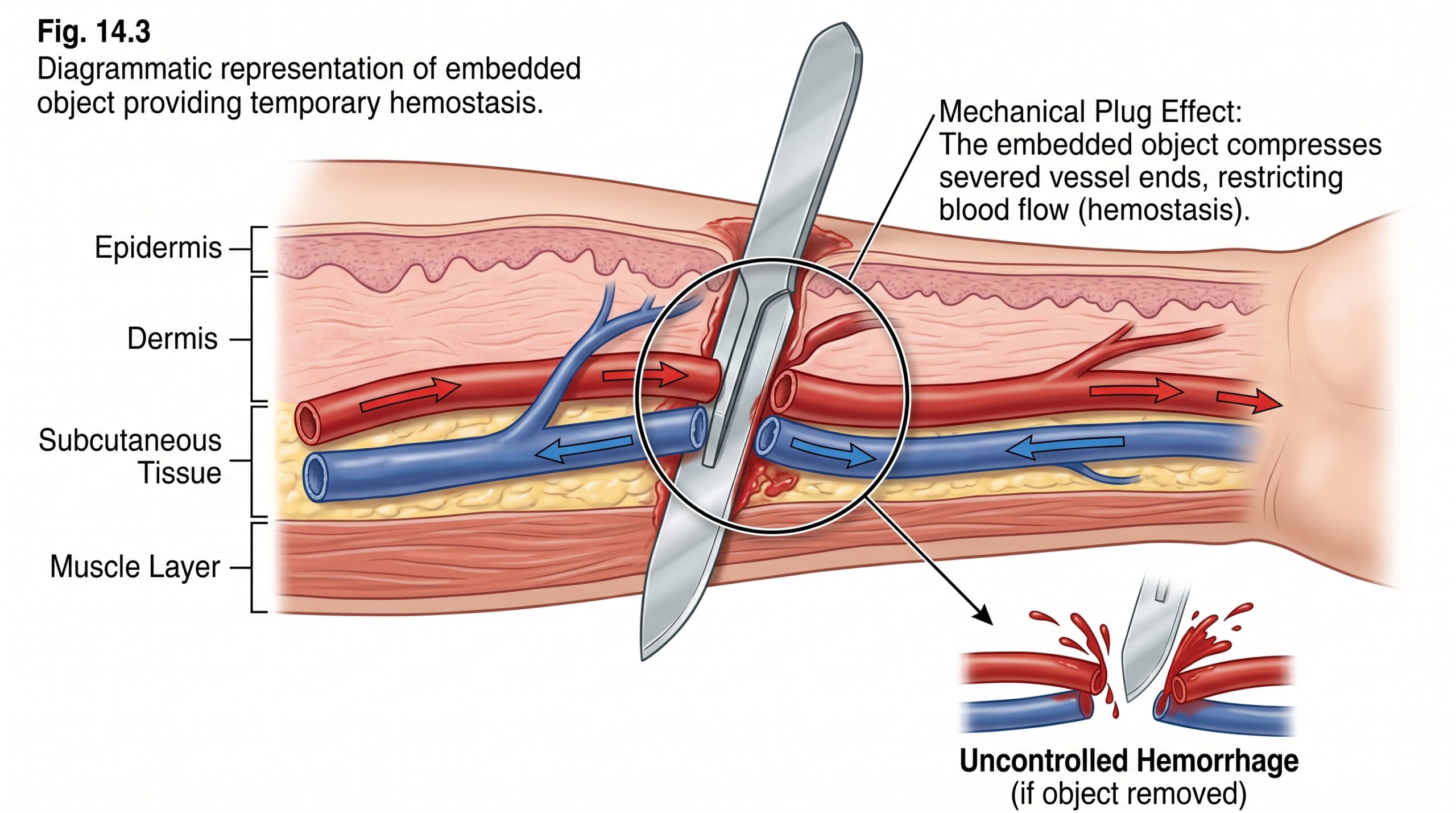
When a blade penetrates the body, it simultaneously compresses surrounding tissue and slows blood flow. In simple terms, the knife is plugging its own wound. Remove it, and that plug disappears instantly.
What Happens When You Pull It Out
The moment a knife is removed, compressed tissue springs back, blood pressure forces a surge through the open channel, and bleeding escalates from slow seepage to catastrophic haemorrhage within 3 to 5 seconds. Without immediate surgical intervention, fatal blood loss can occur in under two minutes.
This is why trauma surgeons follow strict protocols: embedded objects are never removed in the emergency room. The patient goes directly to surgery, knife still in place, with a full team ready to control bleeding the moment it is removed.
What US Military Combat Medics Are Taught
The US military’s Tactical Combat Casualty Care guidelines specifically instruct combat medics to leave all impaled objects in place. Military data from Iraq and Afghanistan confirmed casualties where objects were removed in the field had significantly higher mortality rates.
- Do not remove the knife
- Stabilize the object — prevent movement
- Apply firm pressure around the wound, not on the blade
- Call 911 immediately
- Keep the victim still
Key Takeaway
A knife inside a wound is not making things worse — removing it is. This counterintuitive medical fact has saved thousands of lives.
🔔 Watch the short video version: youtube.com/@NextGenExplorerYT